- Home
- About Us
- coinradar VALT Score
- Start Comparing
- Compare Exchanges
- Compare Wallets
- Compare Crypto Treasuries
- Compare Crypto Banks
- Compare Crypto Scams
- Compare Crypto Indexes
- Compare Crypto IFISA
- Compare ETFs
- Compare Staking Rewards
- Compare Stablecoin Yields
- Compare Crypto Loans
- Compare Whale Wallets
- Compare Crypto Cards
- Compare DeFi
- Compare On/Off Ramp
- Compare Crypto Tax
- Compare Crypto Tax Rules
- Compare Crypto Regulation
- Compare Crypto Gaming
- Compare Crypto Mining
- Blog
- Risk Statement
- Contact Us
- FAQs
Compare Crypto Scams with coinradar ®: How to protect against crypto scams

How to choose a crypto exchange

Crypto Scans - How to Protect Yourself From Crypto Scams
Protect yourself from crypto scams
Crypto scams are becoming more common, and many target beginners through fake websites, phishing links, impostor support agents, and misleading investment offers. This page can help users understand the most common threats and the practical steps they can take to stay safe.
What crypto scams look like
Crypto scams often come disguised as legitimate opportunities. Common examples include fake exchange sign-ups, impersonation accounts on social media, romance scams, “guaranteed return” schemes, wallet-draining links, and fake airdrops or giveaways.
Scammers usually create urgency. They may pressure users to act fast, send funds to the wrong address, or share login details, recovery phrases, or one-time codes.
The most common risks
• Phishing websites that copy real crypto brands.
• Fake support accounts on Telegram, X, Discord, or email.
• Investment scams promising unrealistic returns.
• Malicious wallet apps or browser extensions.
• “Verify your wallet” links that empty funds.
• Giveaway scams asking you to send crypto first.
• Social engineering calls or messages pretending to be an exchange, bank, or recovery service.
How to stay safe
• Double-check the website address before logging in.
• Bookmark official exchange and wallet websites.
• Never share your seed phrase or private keys.
• Turn on two-factor authentication wherever possible.
• Use a password manager and unique passwords.
• Be suspicious of urgent messages and guaranteed profits.
• Test with a small transfer before sending larger amounts.
• Keep most funds in a secure wallet or cold storage if appropriate.
How to spot a fake site
Look for small mistakes, unusual domain names, poor grammar, broken buttons, and copied logos that do not quite match the real brand. Scam sites often try to look polished, but the URL, support links, and login flow usually reveal something is wrong.
If a site asks you to connect a wallet, approve a transaction, or enter recovery words unexpectedly, stop and verify everything first.
What to do if you think you’ve been scammed
If you have already clicked a suspicious link or sent funds, act quickly:
• Disconnect your wallet from suspicious sites.
• Change passwords on related accounts.
• Move remaining assets to a safe wallet.
• Contact the exchange or wallet provider immediately.
• Report the scam to the relevant authorities.
• Warn others if the scam involved a public channel or impersonation account.
What coinradar can help with
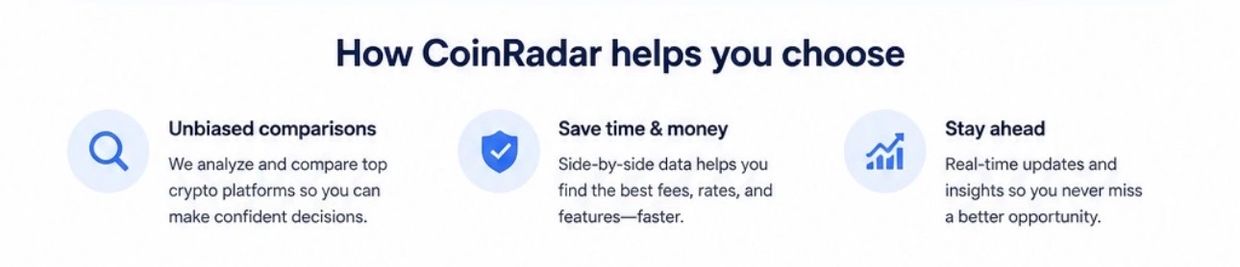
CoinRadar can help users compare platforms with clearer trust signals, better checks, and more beginner-friendly guidance. A dedicated security page can also point users to safer habits before they choose an exchange, wallet, or crypto app.
coinradar - Independent Crypto Comparisons